07 Jul 2023
This summer I built an Indian instrument as a challenge for myself. I learned a lot about woodworking and indian music in the process!
Although this instrument is not for sale I am open to custom orders for sarangis or other similar Indian instruments. Please reach out if you have an idea you’d like to discuss!
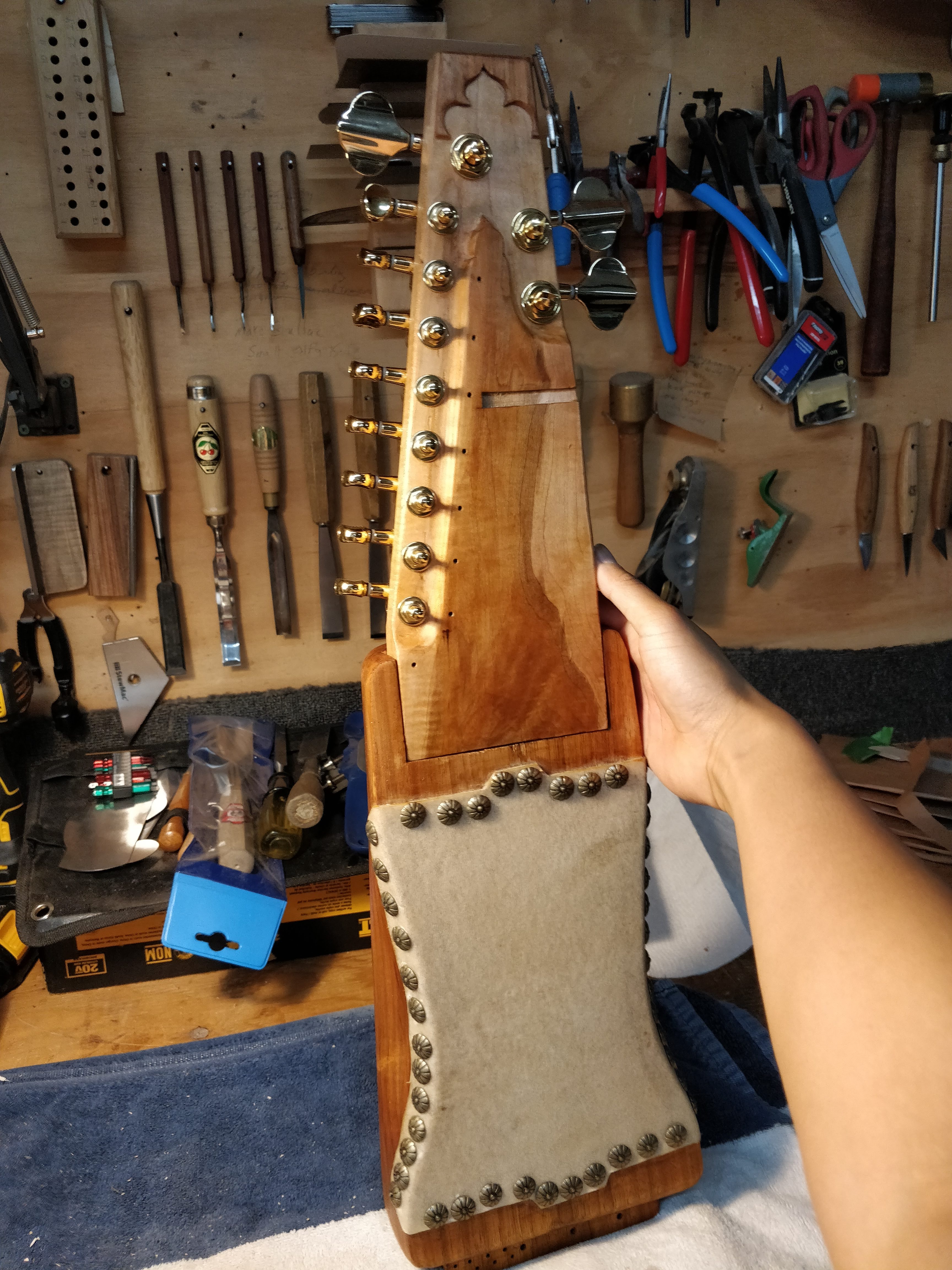
A Sarangi is an Indian stringed instrument. It usually has three strings that are played with a bow and several smaller sympathetic strings. Sympathetic strings are not played directly but resonate along with the main strings. This sarangi is a mix of tradition and my own ideas.
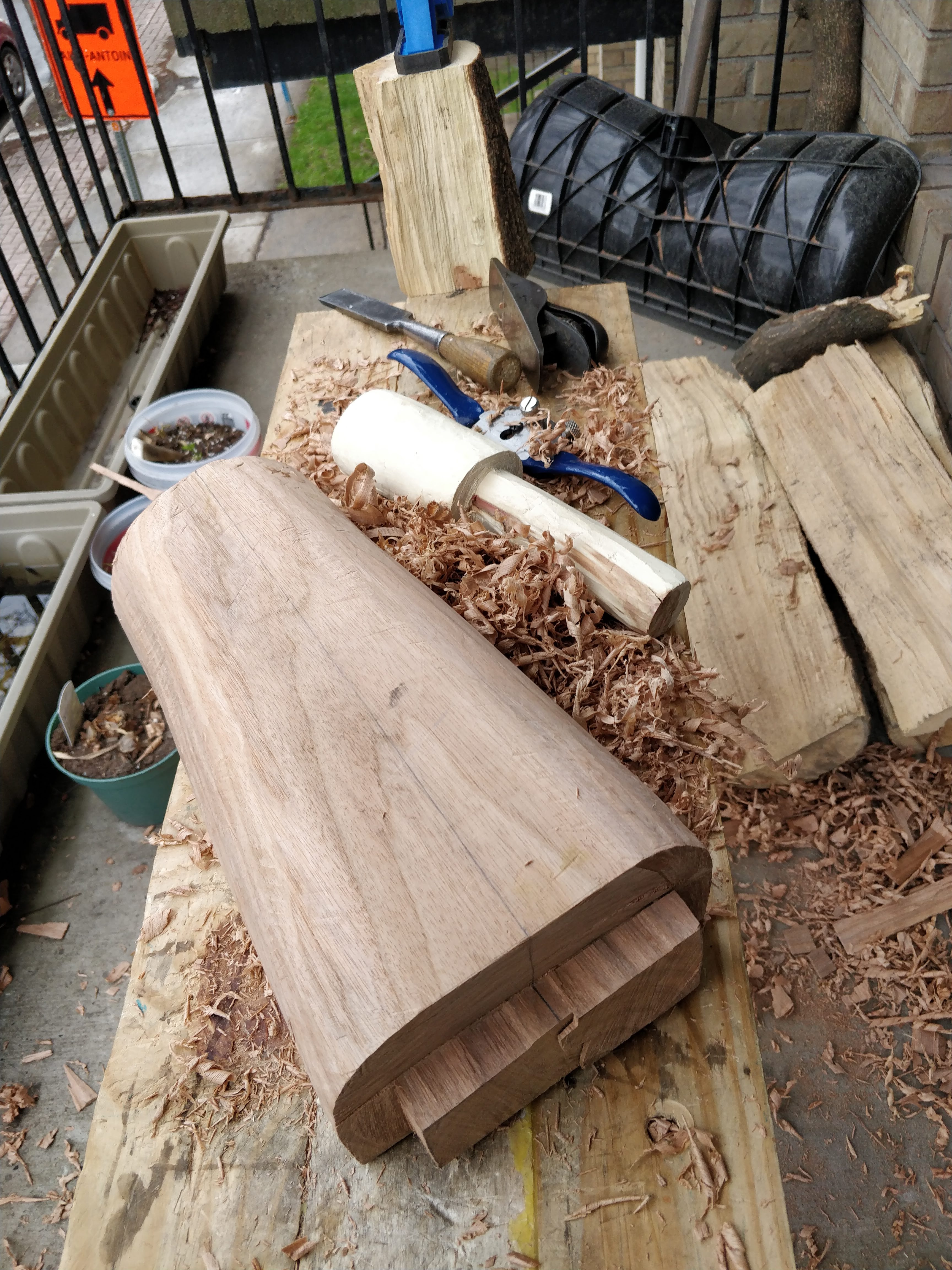
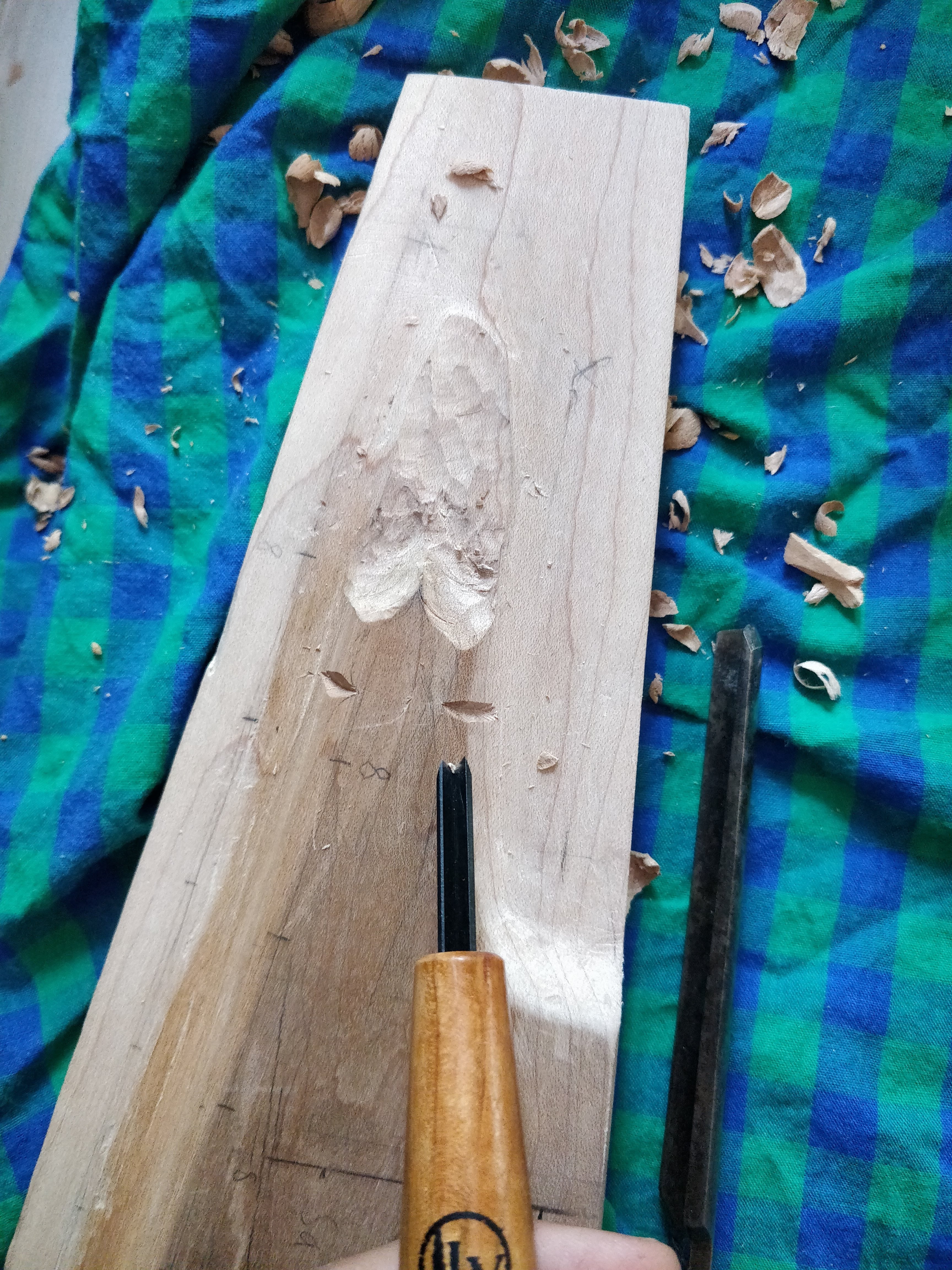
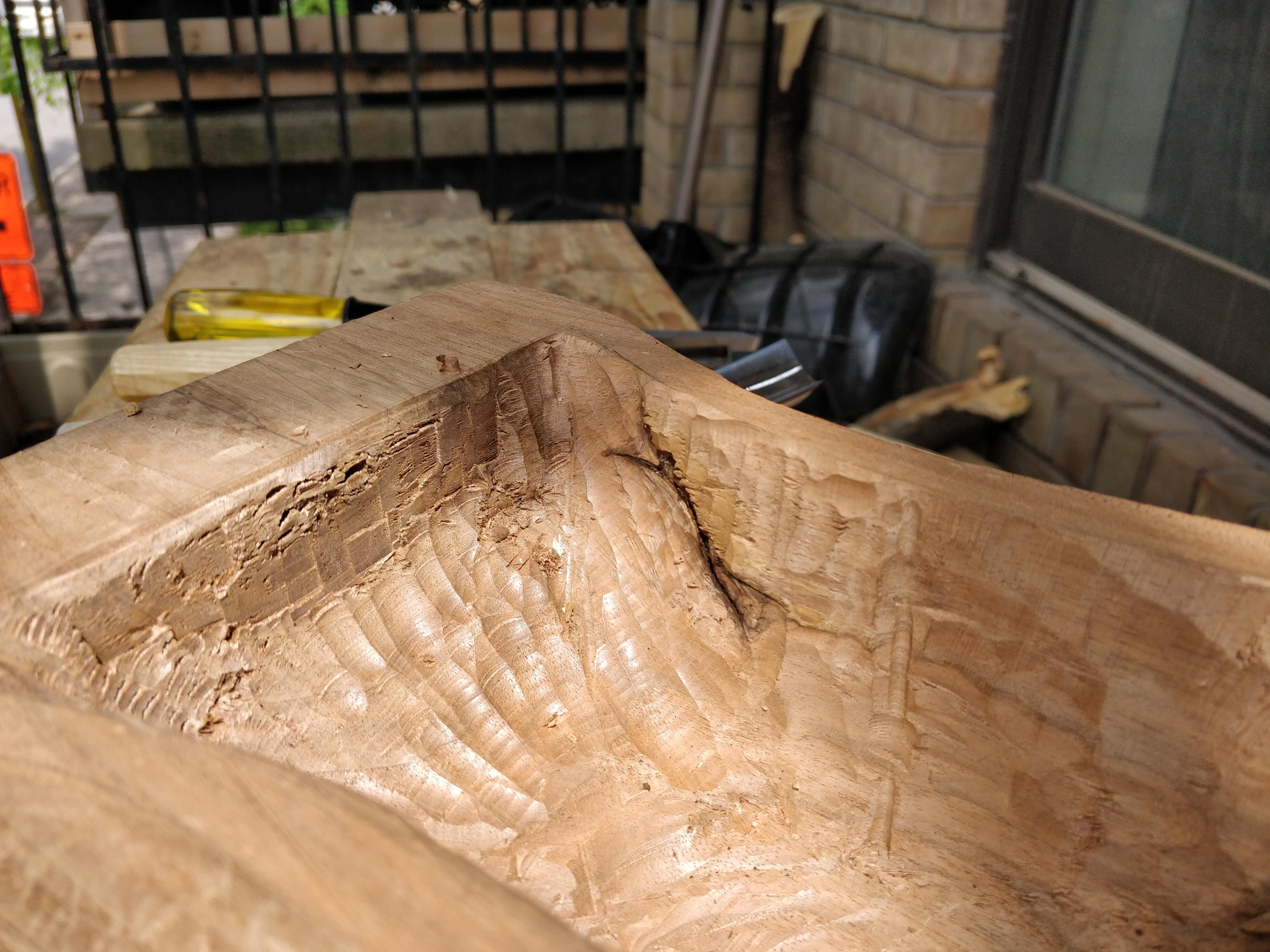
The body is a single piece of walnut that I carved by hand. The neck is maple with a decorative walnut veneer at the top. The design of the veneer is inspired by Mughal architecture.
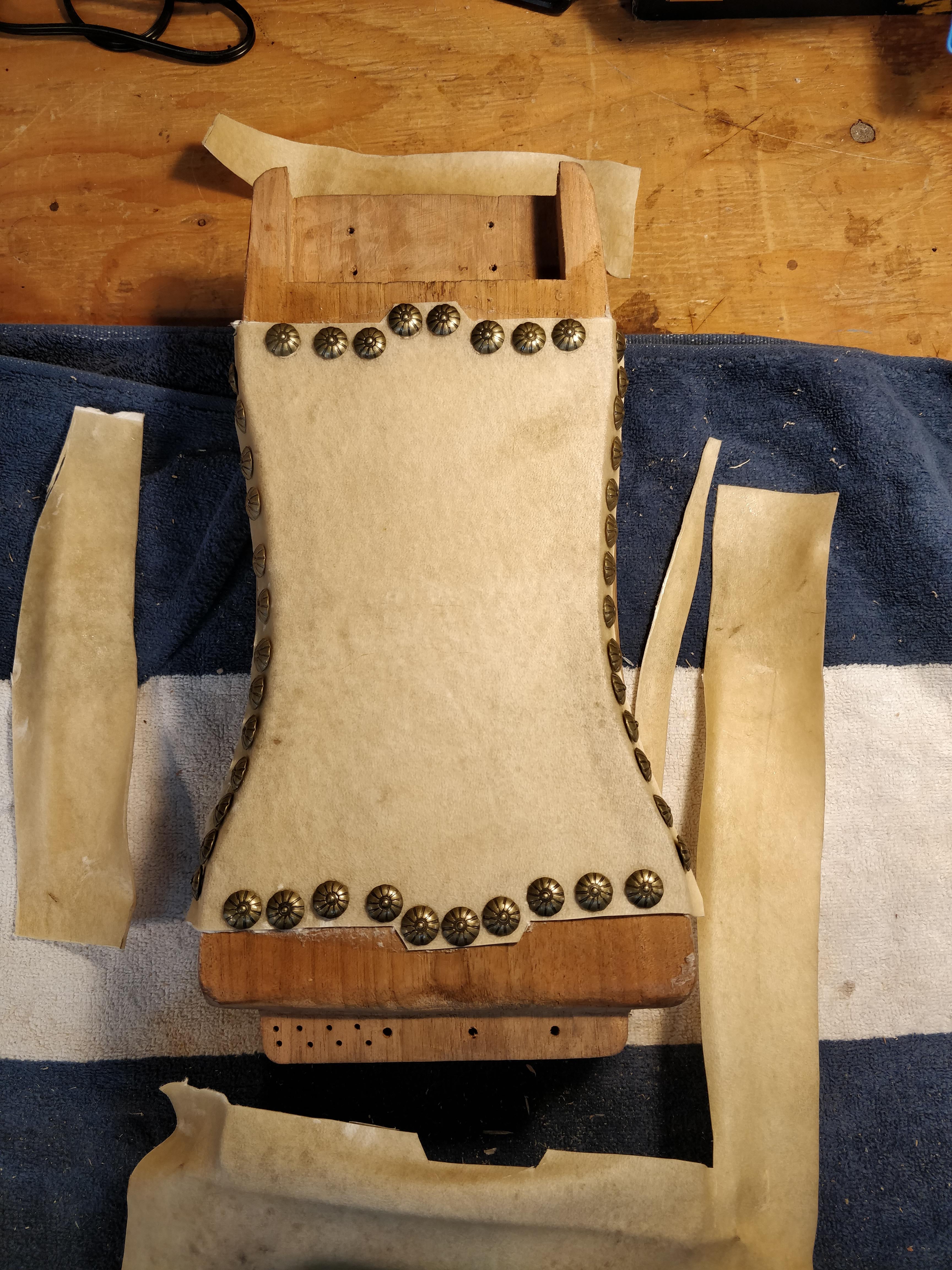
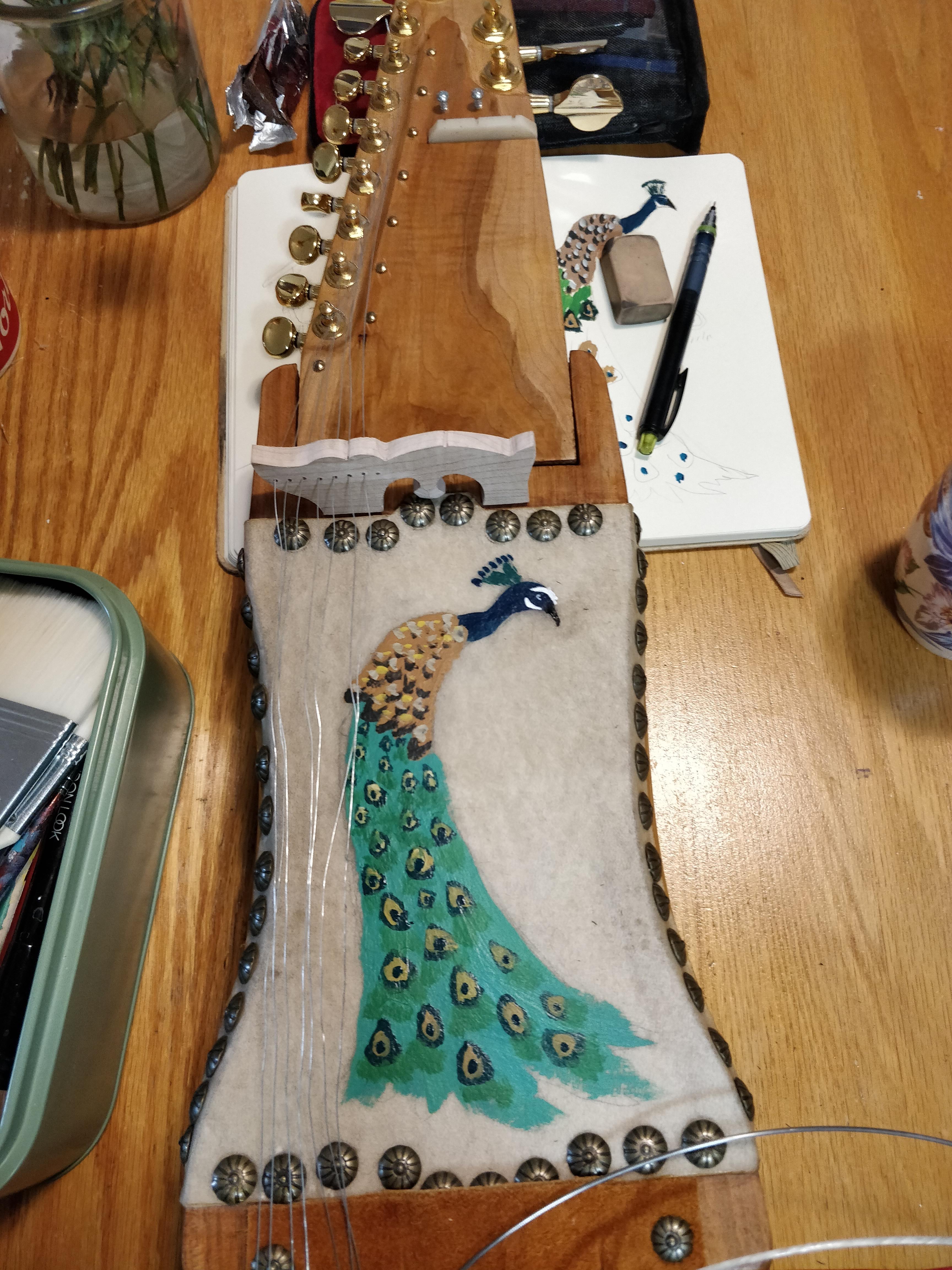
The skin is deer rawhide. It is stretched over the body in a similar construction to a tackhead banjo. This deer hide came from indigenous hunters who hunt for food and don’t use the hides. I also painted a peacock on the skin.
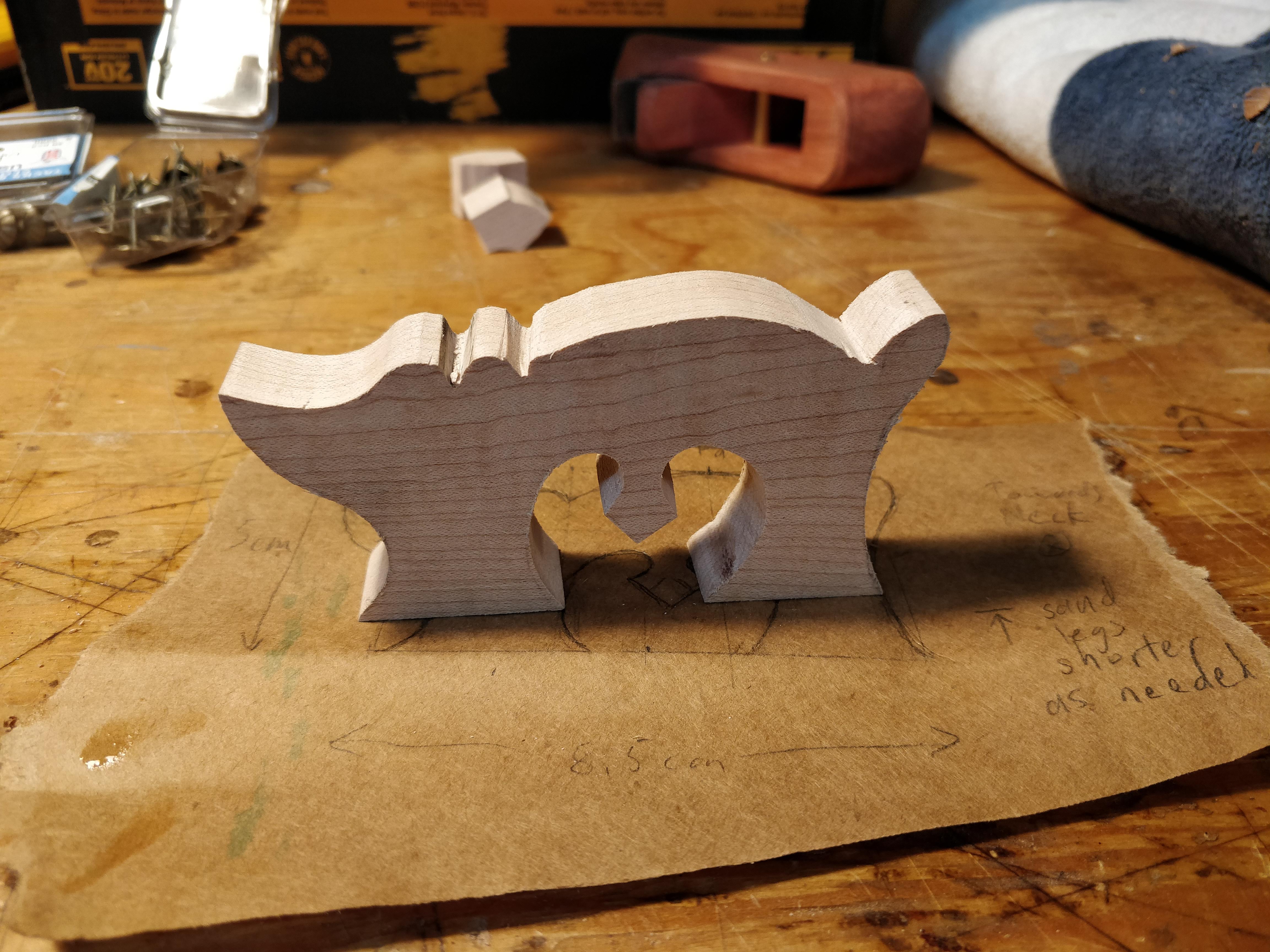
The bridge is a piece of maple that was hand-carved to resemble the traditional shape of sarangi bridges (also they are usually made of bone). This shape is meant to be a very stylized elephant.
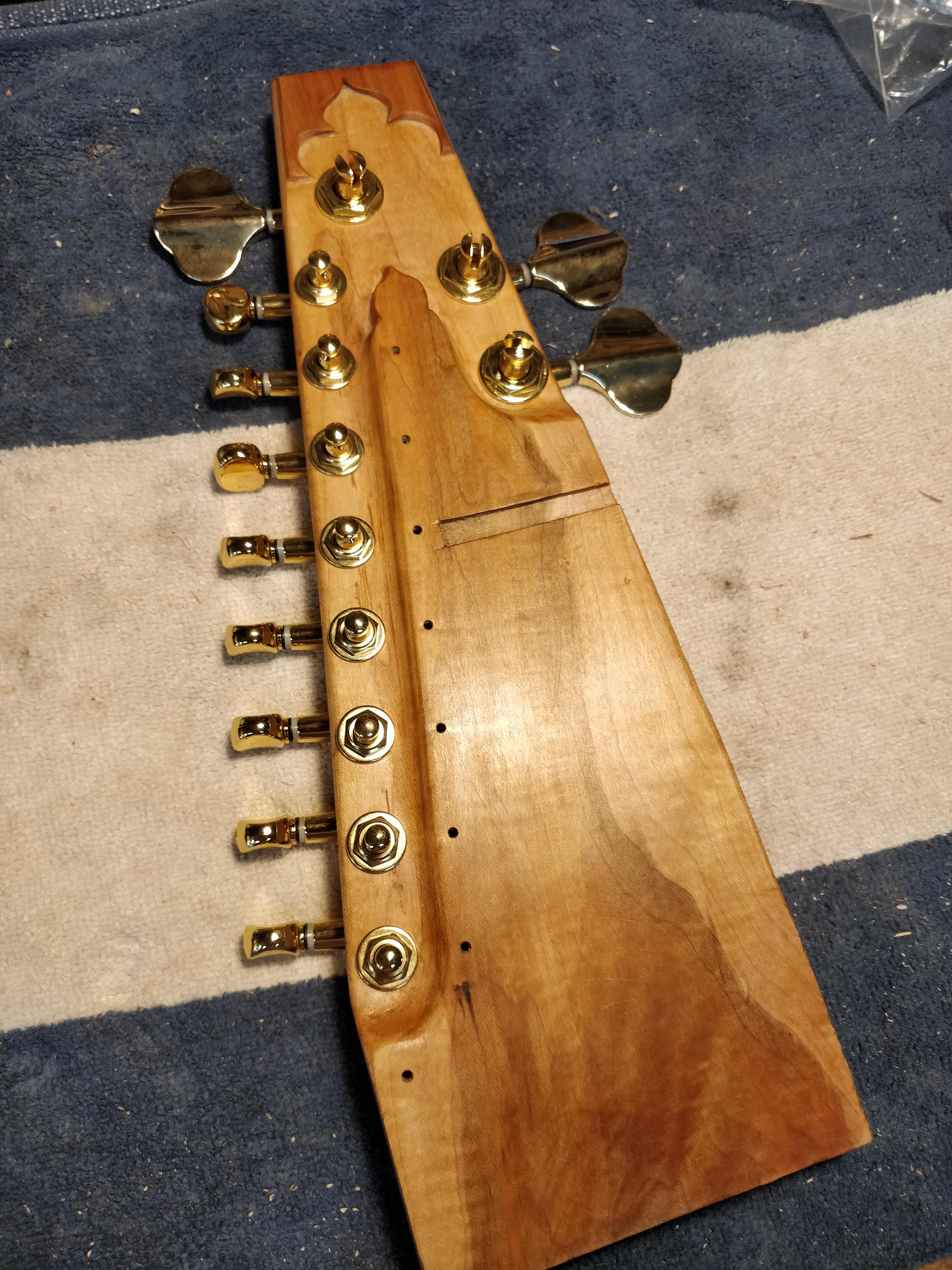
I used gold-plated guitar and bass tuners rather than the old-fashioned friction peg tuners commonly used in Indian instruments. I find these more convenient even though they’re not traditional. As a bonus, I think the gold hardware looks nice!